
How much does land grading cost in Louisiana?
One national cost guide for 2026 puts land grading and leveling at $0.40 to $2.00 per square foot. Its typical job runs $500 to $5,000, with a national average of $2,300. Per acre, three guides range from $15,800 to $45,000.
Guides tie that price to the size of the area, the slope and the fill dirt needed. Put simply, it comes down to how much ground gets shaped and how much dirt has to move.
These are published market ranges. We do site preparation and dirt work around Rayville with a compact track loader. We price each job on site, and the estimate is free.
What does land grading cost per square foot, per acre and per hour?
Guides price grading by the square foot, by the acre, by the hour and by the job. The table puts the published ranges side by side.
| How it is priced | Published range | What it covers |
|---|---|---|
| Finish grading, per square foot | $0.40 to $1.00 | Smoothing and leveling the top 1 to 3 inches of soil |
| Rough grading, per square foot | $1 to $2 | Taking out a slope or shaping ground so it drains |
| Quarter acre home lot | $4,400 to $10,900 | One national guide’s range for a 1/4 acre lot |
| One acre | $15,800 to $45,000 | Low and high ends across three national guides |
| Machine and operator, per hour | $100 to $300 | An operator with a skid steer, backhoe or mini excavator |
| Regrading around a house | $500 to $3,000 | One side of the foundation up to the whole house |
| Driveway grading | $700 to $2,500 | Average job, shaping the base under the drive |
| Fill dirt, per cubic yard | $5 to $30 | The dirt only, with spreading billed on top |
The acre figures look steep for a reason. One guide’s acre range matches its finish grading price per square foot multiplied across all 43,560 square feet. That same guide says most home grading projects cover a quarter acre or less.
So price the ground that actually gets shaped. On a rural tract, that may be a homesite, a lane or one wet corner. The rest of the tract does not belong in the math.
Hourly rates vary by guide. One puts an operator with a machine at $100 to $300 an hour. Another lists $40 to $180 an hour, with the equipment and the operator included.
Finish grading or rough grading?
Finish grading is the last pass. It smooths the top few inches so the ground is ready for seed, sod or rock. Rough grading moves more dirt. It takes out a slope or reshapes the ground so water runs where you want it.
On a job that needs both, the rough pass sets the shape. The finish pass leaves it smooth.
What moves the price of a grading job?
- Area. Guides price by the square foot, so a bigger area costs more.
- Slope. Contractors often price by the change in elevation. A steep spot takes more cutting and more fill.
- Dirt on hand. Moving dirt from the high side to the low side cuts down the fill you buy. How much fill you need depends on what can be moved on site.
- Topsoil. Guides list topsoil at $10 to $55 per cubic yard. Many contractors bill fill and topsoil separately.
- Clearing first. The land has to be cleared before it can be leveled. Our guide to land clearing cost per acre prices that part.
- A survey. One guide puts a topographic survey at $400 to $1,500. The same guide says most home projects do not need a grading plan.
- Drainage work. A swale, a ditch tie-in or a pipe is its own line. That work falls under drainage and culvert installation.
- Wet ground. Clay that stays wet pushes the start date back. More on that below.
How much does it cost to regrade a yard around a house?
One national guide puts regrading at $500 to $1,000 for one side of a house. Grading around the whole house runs $1,000 to $3,000. That work turns water away from the foundation.
The target comes from the residential code Louisiana uses. Lots must be graded so surface water drains away from the foundation walls. The grade has to fall at least 6 inches within the first 10 feet.
Some lots have no room for that fall. A lot line, a wall or a slope can be in the way. The code then calls for drains or swales to carry the water off. Hard surfaces within 10 feet of the foundation need at least a 2 percent slope away from the house.
On flat ground, that fall may take delivered fill as well as shaping. A local supplier brings the dirt, and we spread it and pack it to grade.
What does site prep cost before you build?
Site prep for a new building bundles more than grading. One national guide puts it at $1.50 to $5.00 per square foot. Its average is $3,800, and most jobs run $1,300 to $5,600.
Grading is one line inside that bundle, at $1,000 to $3,000 in the same guide. The other lines can include clearing, excavation, demolition and soil testing.
A house pad is priced mostly by fill depth. It has its own guide: what a house pad costs in Louisiana. We build house pads and building pads with fill a local supplier delivers.
The drive in is another line. One guide puts driveway grading at $700 to $2,500 for an average job. Rock on top is priced by the ton, covered in what a gravel driveway costs in Louisiana.
Why does Delta clay change a grading job?
Sharkey clay covers parts of the Mississippi River floodplain. Its type location is in Madison Parish, near Tallulah. USDA describes Sharkey as poorly drained and very slowly permeable.
Rain soaks into ground like that very slowly, so the shape of the surface decides where water goes. A low spot left in the grade holds water.
The same clay sets the calendar. In normal years, the upper part of its surface layer stays saturated from December through April. One national guide names spring or fall, in dry weather, as the best time to grade. It warns that rain can wash loose soil away.
On Sharkey ground, that usually points to the months after April. The same guide puts yard leveling at 3 days to a week on average. Small jobs can take as little as a day.
What rules apply before grading starts in Louisiana?
What usually applies depends on where the dirt goes and how much ground the job opens up.
- Any digging. Louisiana law requires notice to Louisiana 811 at least 48 hours before mechanized digging. Weekends and holidays do not count.
- A flood zone. Federal flood insurance rules count filling and grading as development. Communities in the program must require permits for development in a mapped A zone, so a floodplain permit usually applies.
- One to five acres. LDEQ has a stormwater general permit for small construction. It covers sites that disturb one acre up to less than five acres.
- Wetlands and creeks. Section 404 of the Clean Water Act covers fill placed in waters of the United States. A permit comes first, unless the work is exempt.
- A city or parish grading permit. Where one is required, national guides list fees of $50 to $500.
We check which of these apply to your ground before we start. Our Louisiana land clearing permit guide has more on the wetland rules.
Which grading jobs need a bigger machine?
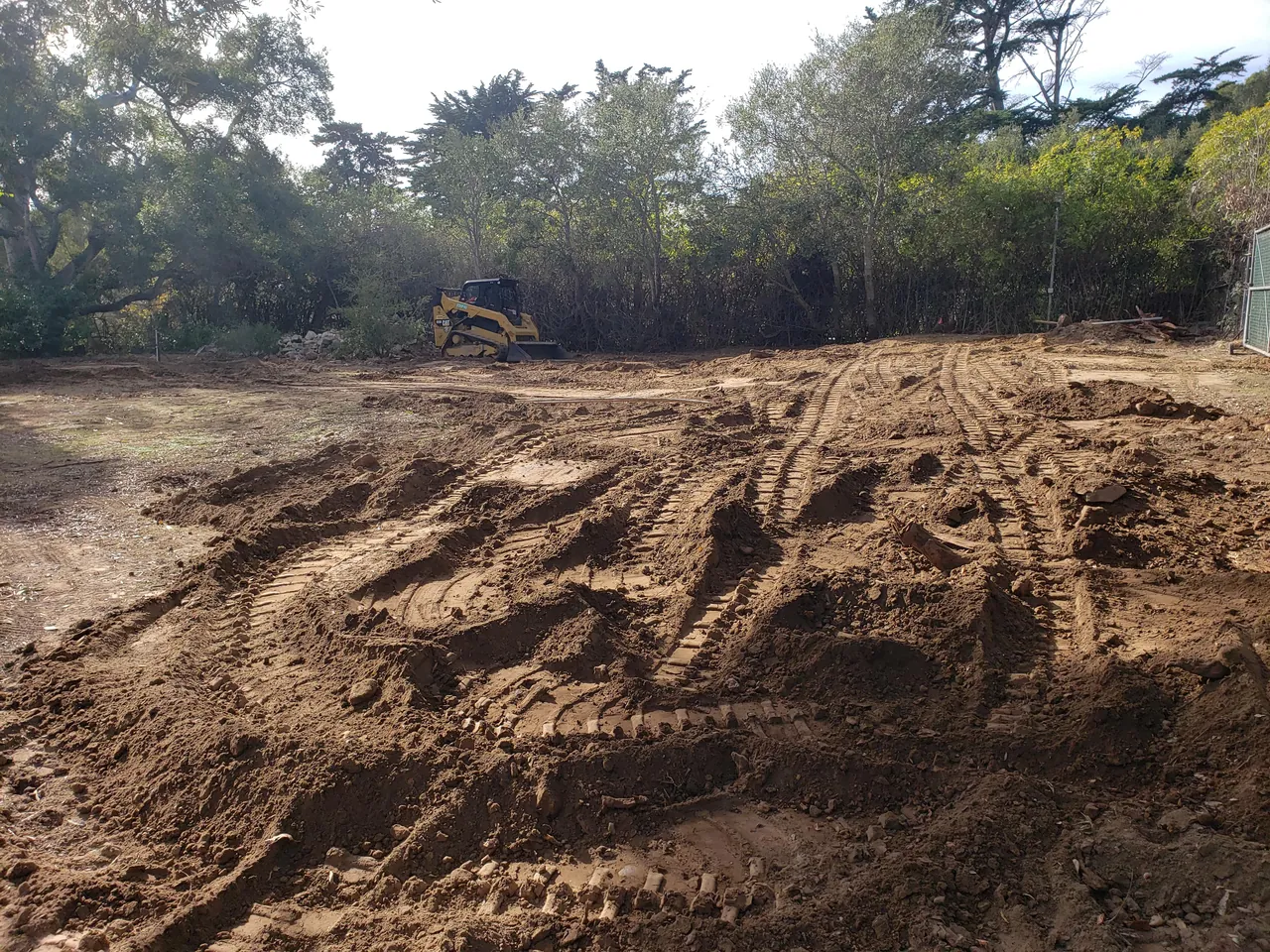
Our grading is compact track loader work. We cut high spots, spread and shape dirt, and track-pack it as we go. A local supplier delivers any fill the job needs. That fits yards, homesites, lanes, barn pads and house pads.
Some jobs need a dozer, excavator, scraper or roller crew, and we tell you when that is the case. Big cut and fill work and laser leveling of farm fields fall in that group.
Compaction testing is a separate matter. Where fill supports footings and foundations, the residential code wants it designed, installed and tested by accepted engineering practice. The builder’s engineer specifies that testing and runs it.
The same loader handles skid steer and track loader jobs such as grapple cleanup and spreading delivered rock.
How do you get a grading quote you can compare?
Some contractors charge by the hour. Others price by the size of the area. Compare quotes on the area shaped and the finished grade, then ask who orders the fill.
Bring these to the estimate and the number firms up:
- Where water stands after a hard rain, with photos if you have them.
- Any plan sheet, survey or elevation your builder gave you.
- The flood zone, if the lot sits in a mapped one.
- The way in for a truck and trailer, including gate width.
Big Cypress Land and Game grades land across Northeast Louisiana from Rayville. See how we handle grading and dirt work, then call (318) 235-7597 for a free on-site estimate.